
Signs of a clogged leach field and what to do
Short answer
A clogged leach field can't absorb water, so you may see slow drains, soggy ground, sewage odors or backups. The usual cause is solids reaching the field and thickening the biomat. Reduce water use and call your local health department or a septic professional. Pumping alone won't fix a fully clogged field.
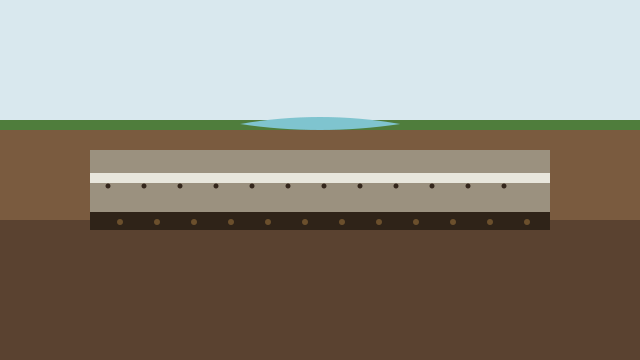
A leach field works only while the soil's pores stay open. Once they fill up, the water has nowhere to go. It backs up into the house or comes up through the ground.
What are the signs of a clogged leach field?
- Drains throughout the house are slow.
- Wet spots or standing water appear over the field.
- You smell sewage around the tank or field.
- Grass over the field is bright green and spongy.
- Sewage backs up into toilets or sinks.
Any of these can have other causes, so have the system checked before paying for major work. Our symptom checker can help you judge how urgent it is.
What causes a leach field to clog?
Usually it starts in the tank. NC State Extension says clogging begins when an unpumped tank lets solids escape into the field, where they build into a biomat that eventually grows thick enough to clog the soil completely.
Grease and excess solids can clog soil pores too. A garbage disposal roughly doubles the solids sent to the tank, and too much water can waterlog the soil.
What should you do first?
- Cut back on water use straight away.
- Keep people and pets away from any wet or smelly area.
- Contact your local health department or a septic professional.
- Have the cause confirmed before you agree to any repair.
If the ground turns soggy after heavy rain, the University of Minnesota suggests using less water until it dries. A field that stays saturated with no clear cause needs a licensed professional.
Stay safe
Wet, spongy soil can mean sewage is reaching the surface, which the University of Minnesota calls an imminent health threat. Don't cover wet spots with soil, and never pipe sewage to a ditch or stream.
Can a clogged leach field be fixed?
That depends on how far it has gone. NC State Extension says pumping a fully clogged system buys only a few days of relief. Fully clogged soil usually needs a new drainfield, an advanced pretreatment unit, or both. See what leach field repairs cost.
Quick answers
Will septic additives unclog a leach field?
Don't rely on them. The EPA says additives aren't needed for a working system, and Massachusetts says they can't make a failing system pass.
Can I fix it without a permit?
Often not. NC State Extension advises against attempting repairs without health department approval.
Rules vary by location
Repair permits and rules vary. Your local health department can tell you what applies before work starts.
Sources
- Septic Systems and Their Maintenance (AG-439-13), NC State Extension
- Why Do Septic Systems Fail?, NC State Extension
- Resolving Septic System Malfunctions, US EPA
- Care and maintenance, University of Minnesota Onsite Sewage Treatment Program
- Troubleshooting, University of Minnesota Onsite Sewage Treatment Program
- Frequent Questions on Septic Systems, US EPA
- Consumer Protection Tips: Septic System Inspections and Repairs, Commonwealth of Massachusetts
Read next
-
 Signs of a failing septic system
Sewage backups, slow drains, wet ground and odors can all point to a septic problem. Learn what each sign may mean and what to do first.
-
 How much does leach field repair cost?
Published guides put leach field repair at about $1,000 to $5,000. See what each repair costs and when a repair may not be enough.
-
 Replacing a leach field and what it costs
Published guides put drain field replacement at about $3,000 to $15,000, and mound fields higher. See what drives the price and what the job involves.