
Replacing a leach field and what it costs
Short answer
Published cost guides put full leach field replacement at about $3,000 to $15,000 for many homes, with mound systems often $10,000 to $20,000. These are third-party, unverified estimates. Soil, field size, access, permits and system type decide your real cost, and your local health department normally has to approve the work first.
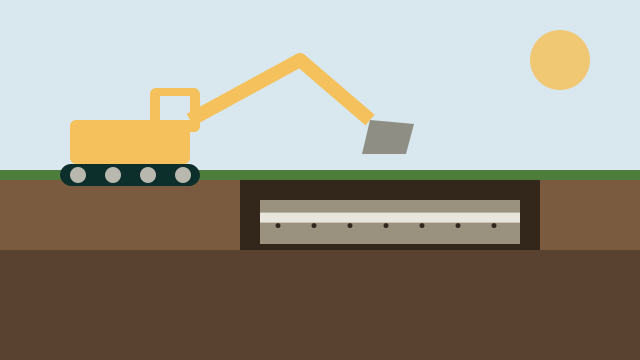
A soggy yard doesn't automatically mean a new leach field. Too much water or one damaged line can cause the same symptoms. Get the cause confirmed first, because it decides what the job actually is.
What does leach field replacement cost?
These are third-party, unverified national estimates, checked on November 5, 2026. They aren't quotes.
| Work | HomeGuide | Angi |
|---|---|---|
| Full replacement, overall | $3,000 to $15,000 | $5,000 to $12,000 |
| Standard anaerobic field | $2,000 to $6,000 | About $5,000 |
| Field for an aerobic system | $7,000 to $10,000 | About $7,000 |
| Evapotranspiration field | $8,000 to $15,000 | About $8,000 |
| Mound | $10,000 to $20,000 | About $12,000 |
| Replacing leach lines | $20 to $45 per linear foot | Not listed |
| Repair or rejuvenation | $1,000 to $5,000 | Not listed |
Where do these numbers come from? HomeGuide says research and project costs reported by its members. Angi cites sources including federal labor data, market studies and industry interviews. Neither page shows how many projects sit behind each figure, so use them as a starting point and nothing more.
What drives the cost?
- Soil and site. Poor soil or a high water table may rule out a standard field.
- Size. Larger homes and slower soils need more field.
- Access. Tight yards, fences and slopes add labor.
- Testing and design. Both guides list percolation tests: Angi cites about $1,300 on average, HomeGuide $600 to $2,000.
- Permits. Angi lists $450 to $2,000. HomeGuide lists $250 to $650.
- Old field and yard work. Abandoning the old field, removing trees and restoring the lawn can all add to the bill.
Labor is the biggest single piece. Both guides put it at about 60% of the project.
Can you just repair the field?
Sometimes. NC State Extension says a minor problem may need nothing more than water-saving devices, while a complete failure may need a new system. Depending on the cause, cutting water use, redirecting runoff or fixing a damaged section may be enough. Only an on-site assessment can tell you which situation you're in.
What does replacement involve?
- Report the problem to your local environmental health department. NC State Extension advises against attempting repairs without its approval.
- Have the failure assessed and the soil evaluated.
- Get a design and a permit, if your county requires them.
- Have the new field built, often in a reserve area if the property has one.
- Have the work inspected, and keep the final records.
Comparing quotes
Massachusetts advises homeowners to get written estimates from several providers, and to make sure the contract states the work plan, costs, payment terms and any guarantees.
What if you can't afford it?
Help may exist, depending on where you live and your income:
- USDA home repair loans and grants. Its May 2025 fact sheet lists loans up to $40,000 at 1% for very-low-income rural homeowners. Grants up to $10,000 are for those aged 62 or older.
- State and local programs. The EPA lists examples in several states, and your county health department may know of others.
What should you do in the meantime?
Use less water and fence off any areas with exposed sewage, as NC State Extension advises. Don't cover wet, smelly spots with soil, and never divert sewage to ditches or streams.
Rules vary by location
Massachusetts, for example, allows up to two years to repair a failed system under Title 5, but other states differ. Your local health department will know which rules and deadlines apply to you.
Quick answers
How much does it cost to replace a leach field?
Published guides put it at about $3,000 to $15,000 for many homes, and more for mounds. These are third-party, unverified estimates.
Sources
- How Much Does a Leach or Drain Field Replacement Cost?, HomeGuide
- How Much Does It Cost to Replace a Septic Tank and Drain Field?, Angi
- Why Do Septic Systems Fail?, NC State Extension
- Frequent Questions on Septic Systems, US EPA
- Consumer Protection Tips: Septic System Inspections and Repairs, Commonwealth of Massachusetts
- Single Family Housing Repair Loans and Grants (May 2025), USDA Rural Development
- Funding for Septic Systems, US EPA
Cost figures from Angi and HomeGuide are third-party, unverified estimates. We link to them so you can check them yourself. We have no connection with either company.
Read next
-
 What is a leach field?
A leach field, or drain field, is the buried part of a septic system that spreads liquid into the soil for treatment. Learn how it works and what harms it.
-
 How much does a septic system cost?
Published guides put a conventional septic system at about $3,000 to $8,500, with engineered systems far higher. Compare the ranges and see what drives them.
-
 Signs of a failing septic system
Sewage backups, slow drains, wet ground and odors can all point to a septic problem. Learn what each sign may mean and what to do first.